
Bridging Public and Private sectors to Strengthen Urban Immunization in Nepal
Dates: 18/04-20/05
Venue: Nepal
Participants: Officials from the Family Welfare Division, Provincial Health Directorates, and Health Offices, pediatricians and medical officers from over 50 private hospitals and 25 medical colleges, NGOs providing routine immunization, technical officers from WHO and key health partners.
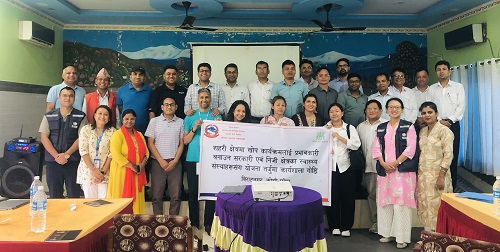 Purpose: The Ministry of Health and Population (MoHP), Nepal, with technical support from World Health Organization (WHO, Nepal) successfully concluded a series of workshops aimed at strengthening urban immunization and Vaccine Preventable Disease (VPD) surveillance through public-private engagement. Aligning with the National Immunization Strategy and in line with the impact goal “promote equity” of Immunization Agenda 2030, this initiative addresses the equity gap in immunization due to rapid urbanization.
Nepal's urban population has increased from 17.8% in 2013 to nearly 22% in 2023 (World Bank), presenting unique challenges including high population density, migration, mobile populations, socio-economic disparities and inequities, and a complex network of public and private health providers. These factors have created gaps in immunization coverage, leaving vulnerable groups, such as migrants and the urban poor, at risk. Recognizing that collaboration is key, the “Coordination and Planning Workshops with Private Sectors for Strengthening Urban Immunization” were held in eight batches in Kathmandu Valley and twelve metros and sub-metropolitan cities across five provinces (Koshi, Madesh, Bagmati, Gandaki, and Lumbini) of Nepal from April to May 2025. The workshops brought together several key stakeholders, including government officials from the Family Welfare Division, Provincial Health Directorates, and Health Offices; pediatricians, microbiologists, and medical officers from over 50 private hospitals and 25 medical colleges; NGOs providing routine immunization; and key health partners.
The primary goal of the workshop was to foster collaboration between government authorities and private healthcare providers and build a unified front to ensure every child, everywhere, benefits from life-saving vaccines and is protected against vaccine-preventable diseases. Discussions centered on aligning immunization efforts, identifying operational challenges, and exploring opportunities for synergy to strengthen national immunization program. Critical issues unique to urban settings were discussed in the workshops, including the identification of missed and zero-dose children, strengthening VPD surveillance and data reporting from the private sector, and ensuring its seamless integration into the national health information system.
Outcomes: The workshops yielded concrete commitments and a renewed sense of shared responsibility for identifying zero dose and under-immunized children through collaborative efforts. The private sector pledged to play a more active role in strengthening Nepal's immunization and surveillance system. By harnessing the combined strength of the public and private sectors, WHO-Nepal is committed to supporting MoHP to promote coverage and equity to ensure that the benefits of immunization reach every corner of its urban cities, leaving no child behind.
-----
Authors: Dr Ela Singh Rathaur, Urban Immunization Officer, Programme for Immunization Preventable Diseases, WHO- Nepal Dr Rahul Pradhan, National Professional Officer, Programme for Immunization Preventable Diseases, WHO-Nepal Dr Abhiyan Gautam, Chief, Child Health and Immunization Service Section, Department of Health Services, Ministry of Health and Population Dr Balwinder Singh, Team Lead, Programme for Immunization Preventable Diseases, WHO Nepal.
Photo: Group photo of participants of Urban Immunization Workshop, Koshi Province, Nepal (WHO Nepal)