
Rota and IBD Sentinel Surveillance Review Meeting Conducted in Nepal
 Dates: 26/11/2024
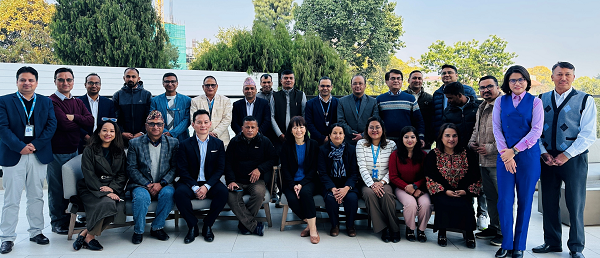
Participants: Officials from the Family Welfare Division, pediatricians and surveillance officers from sentinel sites, and technical officers from WHO
Overview: A sentinel site performance review meeting on strengthening rotavirus (Rota) and invasive bacterial diseases (IBD) surveillance in Nepal was held on 26 November 2024 under the leadership of the Family Welfare Division, Department of Health Services, and with WHO Nepal's support. Participants included officials from the Family Welfare Division, pediatricians and surveillance officers from sentinel sites, and technical officers from WHO. The meeting focused on findings from the sentinel surveillance data, comparing disease patterns before and after vaccine introduction. Laboratory-based sentinel surveillance for Rota and IBD was initiated in Nepal with support from WHO in 2005. Nepal introduced the Pneumococcal Conjugate Vaccine (PCV) in 2015 and the Rotavirus Vaccine (RVV) in 2020 as part of its National Immunization Program. Data generated through this sentinel surveillance has been instrumental in guiding evidence-based decisions on vaccine introduction and monitoring disease burden and trends before and after vaccine rollouts. Laboratory-supported sentinel surveillance is a cornerstone of efforts to control, eliminate, and eradicate vaccine-preventable diseases. In Nepal, rotavirus sentinel surveillance is conducted at three tertiary hospitals—Kanti Children’s Hospital (KCH), B. P. Koirala Institute of Health Sciences (BPKIHS), and Nepalgunj Medical College (NGMC)—ensuring geographical representation. Meanwhile, IBD sentinel surveillance is carried out at Patan Hospital, under the Patan Academy of Health Sciences.
Outcomes: A key takeaway from the review was the observed reduction in rotavirus-related cases following vaccine introduction. This underscores the importance of conducting vaccine effectiveness studies and transitioning to the Global Pediatric Diarrhea Surveillance (GPDS), which will provide valuable evidence for the future introduction of enteric vaccines. Additionally, continued IBD surveillance remains vital to monitor pneumococcal serotype replacement and assess the typhoid disease burden. Notably, Nepal became the first country in the WHO South-East Asia Region to introduce the Typhoid Conjugate Vaccine (TCV) into its National Immunization Program in 2022. The continued collaboration between MoHP, WHO, and sentinel site institutions is essential in ensuring Nepal's immunization program remains evidence-based and impactful.
----
Authors: Dr Pawan Upadhyaya, New Vaccine Officer, Programme for Immunization Preventable Diseases, WHO- Nepal Dr Rahul Pradhan, National Professional Officer, Programme for Immunization Preventable Diseases, WHO-Nepal Dr Abhiyan Gautam, Chief, Child Health and Immunization Service Section, Department of Health Services, Ministry of Health and Population Dr Balwinder Singh, Team Lead, Programme for Immunization Preventable Diseases, WHO Nepal.
Photo: Group photo of participants of sentinel site surveillance review meeting, Kathmandu, Nepal (WHO Nepal)