
Seventeenth Meeting of the WHO South-East Asia Regional Immunization Technical Advisory Group
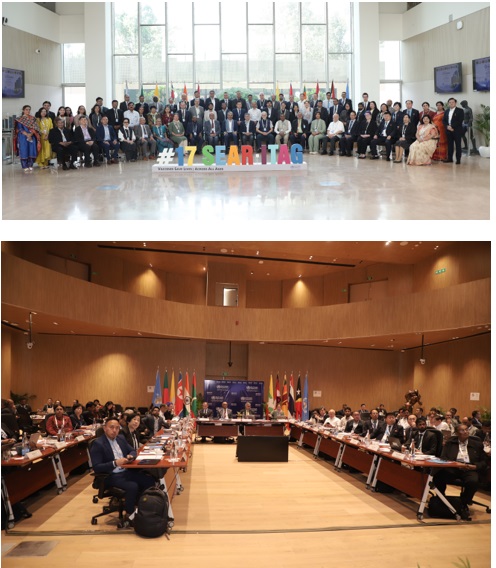
Participants: SEAR-ITAG members; representatives of the 10 Member States and national immunization technical advisory groups; WHO experts from headquarters, regional and country offices; UNICEF, Gavi and other partners; donors, academic and professional organizations; and vaccine manufacturers. Approximately 120 participants joined in person and virtually.
Purpose: To review regional and country progress in implementing the Regional Vaccine Implementation Plan 2022–2026, provide evidence-based guidance on priority immunization and vaccine-preventable disease issues, and inform development of the next Regional Vaccine Implementation Plan 2027–2030.
Details: The Seventeenth Meeting of the WHO South-East Asia Regional Immunization Technical Advisory Group (SEAR-ITAG) brought together regional advisers, Member States, national immunization technical advisory groups (NITAGs), WHO experts and partners to assess progress, examine emerging evidence and agree on priorities for stronger and more sustainable immunization programmes across the Region.
The three-day hybrid meeting combined regional and global updates, parallel reviews of progress in all 10 Member States, technical sessions, moderated discussions, a round table on sustainable financing and closed deliberations by SEAR-ITAG members. The meeting reviewed implementation of the Regional Vaccine Implementation Plan 2022–2026 and considered priorities for the next implementation plan for 2027–2030, aligned with Immunization Agenda 2030.
Participants recognized important regional achievements. In 2025, DTP3 coverage reached 94%, while MCV1 coverage reached 96%. The estimated number of zero-dose children declined to about 1.2 million. The Region also sustained its wild poliovirus-free status and maternal and neonatal tetanus elimination, while continuing to advance rubella elimination, hepatitis B control and access to new and underused vaccines.
At the same time, the meeting emphasized that these achievements remain vulnerable. Persistent subnational inequities, recurrent measles outbreaks, age-specific immunity gaps, surveillance and laboratory weaknesses, vaccine stock-outs, fragmented information systems, workforce constraints and uncertain financing could reverse progress. Particular attention is needed for underserved urban communities, remote and border populations, migrants and mobile groups, and communities affected by conflict, emergencies and climate-related shocks.
Technical discussions addressed equitable access to routine, catch-up and new vaccines; vaccine portfolio optimization and prioritization; vaccine forecasting and supply; vaccine safety; polio eradication and transition; measles and rubella elimination; sustaining maternal and neonatal tetanus elimination; hepatitis B control; digital health and geo-analytics; vaccine confidence; climate-resilient immunization; research preparedness; and vaccination in emergencies. Country reviews enabled tailored guidance based on national achievements, gaps and programme priorities.
SEAR-ITAG called for intensified efforts to identify, track and vaccinate zero-dose and under-immunized children; close measles and rubella immunity gaps; strengthen integrated vaccine-preventable disease surveillance and laboratory networks; prevent vaccine stock-outs through improved forecasting and supply-chain management; reinforce vaccine-safety systems; and protect essential polio functions during transition. Countries were also encouraged to strengthen NITAG-led, evidence-informed decision-making and to institutionalize digital systems, behavioural and social data, climate resilience and sustainable domestic financing.
The meeting concluded with regional and country-specific recommendations intended to be translated into prioritized, costed and time-bound national actions. WHO, UNICEF and partners reaffirmed their commitment to coordinated technical support. The meeting underscored that protecting the Region’s immunization gains will require strong country ownership, accountability, investment and collaboration so that every person, at every age, can benefit from vaccination.
Further information: WHO South-East Asia immunization experts meet focuses on measles outbreaks and closing immunity gaps
-------
Author: BURA, Vinod, and KIM, Kwang Jin - WHO Regional Office for South-East Asia
Photo: © WHO SEARO