
Side Event at the Seventy-eighth Session of the WHO Regional Committee for South-East Asia – “Enhancing Programmatic and Financial Sustainability of Immunization Programmes in the South-East Asia Region”
Dates: 13 October 2025
Venue: Colombo, Sri Lanka
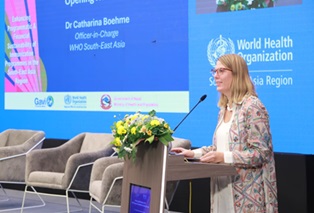 The heads of delegations from the Member States of the SE Asia Region, including Hon’ble Minister of Health from Bangladesh, Nepal Ambassador to Sri Lanka and DPR Korea Ambassador to India, Dr Catharina Boehme, Officer-in-Charge, WHO South-East Asia, the Chief Country Delivery Officer from Gavi, the Vaccine Alliance, programme managers, partners and experts
Purpose: GAVI, the Vaccine Alliance; the WHO South-East Asia Regional Office; and the Government of Nepal convened a side-event during the Seventy-eighth session of the WHO Regional Committee for South-East Asia titled “Enhancing Programmatic and Financial Sustainability of Immunization Programmes in the South-East Asia Region.”
The session aimed to continue dialogue with Member States on sustaining national immunization programmes, advocate regional priorities such as HPV vaccination and measles-rubella elimination, present Gavi Leap principles for country ownership, promote Vaccine Portfolio Optimization for evidence-based decisions, and strengthen Alliance advocacy for sustainable, impactful immunization interventions across the Region.
Details: In the opening address, H.E. Purna Bahadur Nepali, Ambassador of Nepal to Sri Lanka, emphasized immunization as a cornerstone of equity, human development, and health security, while Dr. Catharina Boehme, Officer-in-Charge, WHO South-East Asia Region, acknowledged the Region’s remarkable vaccination successes but cautioned against complacency amid tightening fiscal space.
Mr. Thabani Maphosa, Chief Country Programmes Delivery at Gavi, introduced the Gavi LEAP initiative, a country-centric model under Strategy 6.0 designed to simplify funding mechanisms, strengthen accountability, and enhance country ownership of technical assistance and resources. Dr Vinod Bura Coordinator IVD highlighted the progress made in SEA Region in addressing zero dose children and increase in breadth of protection which is a result of incremental improvement in introducing new vaccines and expanding vaccination services to previously missed populations.
The subsequent panel discussion, featuring representatives from Nepal, Sri Lanka, SEARO and Gavi, emphasized domestic financing as the foundation for sustainable immunization programmes, particularly as external support transitions. Panelists highlighted the importance of aligning national vaccine ambitions with fiscal realities through data-driven planning and portfolio optimization. Country examples showcasing sustained high coverage and expanding co-financing demonstrated the critical role of political commitment, efficient resource use, and financial stewardship in ensuring long-term sustainability.
The session concluded that long-term sustainability depends on strong domestic investment, efficient resource use, and coordinated partner support. This side-event underscored that sustaining immunization gains will require technical rigor, operational agility and sustained political commitment for sustainable domestic financing.
-----
Author: Dr Vinod Bura, Dr Rahul Srivastava, Ms Uttara Aggarwal, WHO Regional Office for South-East Asia, IVD unit, CDS/ SEARO
Photo: Dr Catharina Boehme, Officer-in-Charge, WHO South-East Asia delivering the Opening Remarks at the side event during the Seventy-eighth Session of the WHO Regional Committee for South-East Asia, ‘Enhancing Programmatic and Financial Sustainability of Immunization Programmes in the South-East Asia Region’ (© WHO SEARO)