
South Sudan eliminates maternal and neonatal tetanus
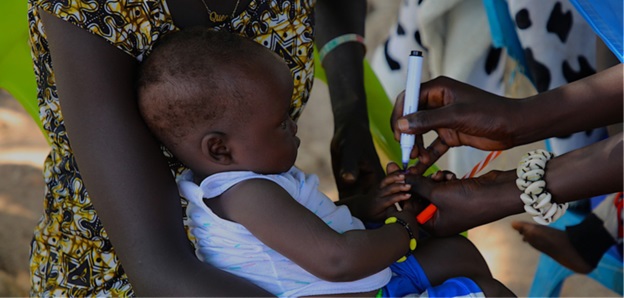 Maternal and neonatal tetanus (MNT) remains a major public health problem in African region despite decades of tremendous efforts to control and eliminate the disease[1][2]. WHO estimates that in 2023, 4,585 newborns died from Neonatal Tetanus, a 75% reduction from the situation in 2000[3].
According to the Global Aim Lab, “each year, 2.6 million babies are stillborn, and 2.5 million newborns die during the first month of life.
Almost 300,000 women die each year from causes related to pregnancy and childbirth”[4]. As one of the 10 countries globally yet to achieve Maternal and Neonatal Tetanus Elimination (MNTE), South Sudan undertook from 2021 and 2023 three rounds of Supplementary Immunization Activities with Tetanus Toxoid Containing vaccines to bridge the gap left by routine immunization, safer deliveries and better MNT surveillance.
Commissioned by the Ministry of Health of South Sudan to determine the MNTE status in the country, the WHO country office of South Sudan recommended to target Duk county for a pre-validation assessment. This county was in fact the least performing of the five counties of the South Sudan due to the lowest skilled birth attendance, ante natal care coverage, and most fragile health care system.
A survey using the lot quality assurance–cluster sampling methodology was run to investigate the 139 clusters identified and scattered in 76 villages, two health facilities and four communities. Sudan's Ministry of Health, WHO and UNICEF supported the process facilitated by 22 surveyors and 10 monitors during the field data collection which took place from 26 November to 3 December 2025.
The LQA survey revealed high Td protection performance of over 80%, which was compatible with Maternal Neonatal Tetanus elimination in accordance with the immunization and vaccines related implementation research advisory committee (IVIR-AC) guideline. This coverage was achieved through routine immunization underestimating doses given during the SIAs and infancy due to lost memories. Based on the impressive Td coverage, the survey concludes that, MNT has been eliminated in Duk county, Jonglei State, and therefore South Sudan has eliminated MNT[5].
Other countries including Angola and Nigeria are close to elimination status while Central African Republic is preparing their validation survey. As a reminder, MNT elimination is defined for a country as having less than one Neonatal Tetanus case per 1,000 live births in every district/County per year. MNT is a deadly disease with an 80-100% case-fatality rate among neonates especially in areas with poor immunization coverage and limited access to clean deliveries[6][7].
[1] World Health Organization. Progress towards maternal and neonatal tetanus elimination - worldwide, 2000-2018. Weekly Epidemiological Record 95 (18), 173-184. Accessed 02 Mar 2025.
[2] World Health Organization. Progress towards maternal and neonatal tetanus elimination - worldwide, 2000-2022. Weekly Epidemiological Record 99 (29), 381-39. Accessed 02 Mar 2025.
[3] WHO. Immunization dashboard Global: Global Reported cases of vaccine-preventable diseases (VPDs). WHO. 2025. Accessed 26th February 2025.
[4] The Global AIM Lab. (2026). Home. Harvard University. https://globalaim.bwh.harvard.edu/. Accessed 03 Mar 2025.
[5] Ministry of Health (2026). Report on the validation of Maternal and Neonatal Tetanus Elimination Jonglei State, South Sudan, November 2025
[6] World Health Organization. Maternal and Neonatal Tetanus Elimination: Progress towards global MNT elimination. World Health Organization. 2025. Accessed 26th February 2025.
[7] World Health Organization. Neonatal Tetanus: Vaccine Preventable Diseases Surveillance Standards. World Health Organization. September 5, 2018. Accessed 26th February 2025.
--------
Authors: André Arsène Bita Fouda (WHO/AFRO), Crépin Hilaire Dadjo (WHO/IST West Africa), Eric Rurangwa (WHO/South Sudan), Weldegebriel Goitom Gebremedhin (WHO/IST Eastern and Southern Africa), Wanyoike Sarah Waithera (WHO/IST Eastern and Southern Africa), Ado Mpia Bwaka (WHO/IST West Africa), Akpaka A. Kalu WHO/AFRO), Karamagi Humphrey (WHO/South Sudan), Senkwe Mutale (WHO/South Sudan), Benido Impouma (WHO/AFRO), Diana Blanc Chang (WHO/HQ).
Photo: A child is marked after vaccination, Jonglei State, South Sudan. Credit: WCO South Sudan