
The Big Catch-Up initiative reached nearly 9 million Zero dose children in Africa
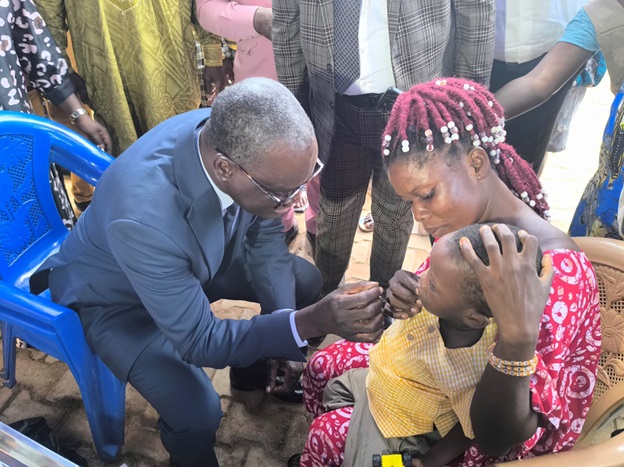
The African continent joined the global community in commemorating World Immunization Week under the banner of African Vaccination Week from 24–30 April 2026, to raise awareness about vaccines and vaccination. This year’s commemoration presented a valuable opportunity to review the progress made through the Big Catch-Up (BCU) initiative across the continent.
One must first recall the devastating impact the COVID-19 pandemic had on health systems in Africa. In addition, disinformation campaigns, declining trust in vaccines and health authorities, and reluctance or refusal to visit health facilities led to substantial declines in immunization coverage and an increase in zero-dose and under-immunized children as a result of pandemic-related disruptions.
In 2023, the World Health Organization (WHO), together with the United Nations Children’s Fund (UNICEF), Gavi, and other Immunization Agenda 2030 (IA2030) implementing partners, launched a global recovery initiative—the “Big Catch-Up”—to address immunization gaps caused by declining coverage during the pandemic.
A total of 24 priority countries in the African Region adopted the BCU initiative to reach children aged 12–59 months who had previously missed life-saving vaccines, restore immunization coverage to pre-pandemic levels, and strengthen immunization systems towards achieving IA2030 goals.
By December 2025, these efforts had reached an estimated 8.75 million zero-dose children aged 12–59 months, representing 71% of the regional target. Three countries (Zambia, Mozambique and Burkina Faso) have successfully restored annual coverage with the first dose of the pentavalent vaccine to at least 2019 levels. Over the same period, 10 countries (Cameroon, Central African Republic, Chad, Ethiopia, Guinea, Mali, Mauritania, Niger, South Sudan and Togo) have surpassed their pre-pandemic Penta1 coverage and continue on an upward trend.
Nevertheless, significant acceleration is still needed across the Region to increase access to and uptake of timely routine vaccination and to achieve the IA2030 goal of halving the number of zero-dose children by 2030. These achievements have been driven by strong national leadership and multi-stakeholder coordination, integrated service delivery, data-driven approaches and digital innovations, and community-centred strategies.
Despite this progress, significant pockets of zero-dose and under-immunized children remain, particularly in conflict-affected, hard-to-reach and underserved communities. These gaps continue to contribute to the persistence of vaccine-preventable diseases in the region, including polio, measles and diphtheria.
As the BCU concludes on 30 June 2026, countries across the region are working to institutionalize catch-up vaccination within routine immunization systems, ensuring systematic opportunities to identify and vaccinate all children under five who have missed any or all routine doses. These efforts will be critical to sustaining gains achieved through the initiative and advancing progress towards the Immunization Agenda 2030 goals.
-----
Authors: Hadiatou DIALLO (WHO/IST West Africa), Angela OMONDI (WHO/IST ESA), Hilaire DADJO (WHO/IST West Africa), Oluchi Nnenna BASSEY (WHO/HQ), Stephanie SHENDALE (WHO/HQ).
Image: ©MoH/Togo - WHO Representative in Togo, Dr Hamadou Nouhou, administers a vaccine at the launching of the Measles and rubella campaign integrated with catch-up vaccination, 24 – 30 Nov. 2025