
Reaching zero-dose and under-immunized children in 2025: the Bangladesh experience
Since the inception of the Expanded Program on Immunization (EPI) in 1979, Bangladesh has made remarkable strides in delivering life-saving vaccines to every eligible child and women. Under the Directorate General of Health Services (DGHS), the national EPI has played a pivotal role in controlling, eliminating, and eradicating vaccine-preventable diseases. Despite significant progress, reaching the last mile- especially zero-dose and under-immunized children- remains a challenge, particularly in hard-to-reach, urban slums and under-served populations.
According to the Coverage Evaluation Survey (CES) 2023, valid full vaccination coverage in Bangladesh stands at 81.6%. While crude coverage remains high, the gap between crude and valid coverage indicates challenges in the timeliness and completeness of vaccinations. Bridging this gap and ensuring equity in immunization are key priorities for national program.
Bangladesh presents a diverse and complex geography, which directly impacts immunization service delivery. Hard-to-reach rural areas such as char (river islands), haor (wetlands), and hilly regions, alongside culturally marginalized groups including ethnic minorities, nomadic populations, brothel communities, urban slum, and tea garden workers, pose unique challenges.
An online routine EPI monitoring tool, developed jointly by the national EPI and WHO Immunization and Vaccine Development (WHO-IVD), is being used by government supervisors and WHO’s Surveillance and Immunization Medical Officers (SIMOs) to monitor progress and identify zero-dose and under-immunized children in challenging settings.
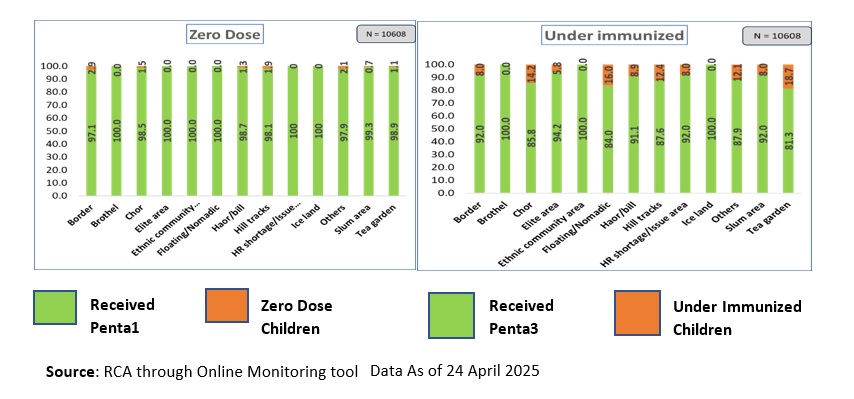
Data from this system revels that:
- 1.1% of children nationwide are ZD
- The prevalence is higher in border areas (2.9%)
- 8.8% of children are under-immunized nationally
- The highest concentration of IU children is found in tea garden areas (18.7%)
Urban Immunization: A growing Concern
While rural areas face logistical and cultural barriers, rapid urbanization, high population density, and frequent migration contribute to immunization gaps in cities. Challenges include:
- Children living in slums or high rise-buildings
- Working parents with limited time
- A large floating population with inconsistent health care access
- Staff shortage in city corporation and municipalities
As a result, valid full immunization vaccination coverage in urban areas is only 79% with several municipalities performing below national averages.
Strategic interventions for 2025
In response to these challenges, WHO-IVD is working closely with the national EPI and sub-national managers to implement a comprehensive strategy by December 2025. The goal is to identify and vaccinate zero-dose and under-immunized children and ensure equitable immunization access across both rural and urban settings.
The planned interventions include:
- Periodic Intensification of Routine Immunization (PIRI) focused in 34-low performing municipalities across 7 divisions
- Tracking, enlisting, and vaccinating zero-dose and under-immunized children in major 8 city corporations
- House to house searches and line listing of missed children in 2,132 sub- blocks across 132 Upazilas in 27 Districts conduct twice in a year in rural areas to ensure no child is left behind
Looking Ahead
Bangladesh’s commitment to leaving no one behind in immunization is evident through its data-driven planning and community-focused outreach. However, sustained success will depend on:
- Continued support from development partners and donors
- Community engagement and demand generation
- Strengthening human resources and cold chain logistics
With strategic investments and coordinated efforts, Bangladesh is poised to make substantial progress in reducing the number of zero-dose and under-immunized children by the end of 2025—further advancing the country’s goal of universal immunization coverage.
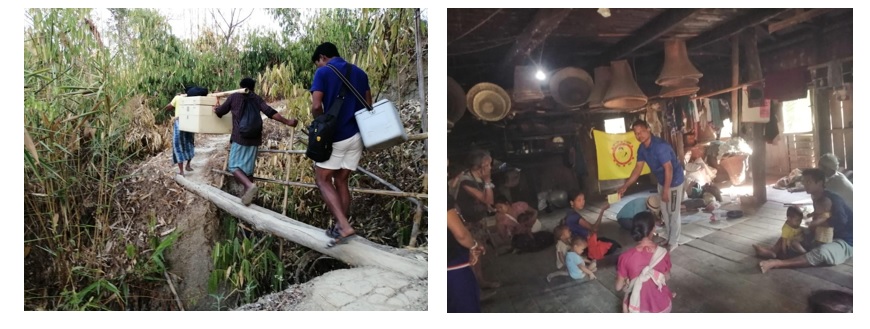 Vaccine transportation and vaccination session at Bandarban hilly district
-----
Author: Dr Rajendra Bohara, Team Leader - IVD, World Health Organization Country Office