
WHO South-East Asia Region hosts regional webinar on NITAG Maturity Assessment Tool
Dates: 13 January 2026
Venue: New Delhi
Participants: The webinar on NITAG Maturity Assessment Tool brought together more than 50 participants, representing NITAGs and their secretariats from across the Region, the National Centre for Immunization Research and Surveillance (NCIRS), the Task Force for Global Health, the Chair of the South-East Asia Region Immunization Technical Advisory Group (SEAR-ITAG), UNICEF’s regional office, WHO headquarters, the WHO Regional Office, and WHO Country Offices.
Purpose: The webinar was organized to introduce the National Immunization Technical Advisory Group (NITAG) Maturity Assessment Tool (NMAT) and provide countries with a standardized framework to objectively assess and strengthen NITAG functionality. It aimed to equip participants with practical guidance on applying the tool, interpreting maturity levels, and developing targeted improvement plans to enhance evidence informed immunization policymaking across the Region.
Details: The World Health Organization South-East Asia Regional Office (WHO SEARO) convened a regional webinar on 30 January 2026 to introduce and promote the use of the National Immunization Technical Advisory Group (NITAG) Maturity Assessment Tool (NMAT). The session brought together more than 50 participants from NITAGs and their secretariats, the National Centre for Immunization Research and Surveillance (NCIRS), the Task Force for Global Health, the Chair of the South-East Asia Region Immunization Technical Advisory Group (SEAR ITAG), UNICEF regional office, WHO headquarters, the WHO regional office, and WHO country offices across the Region.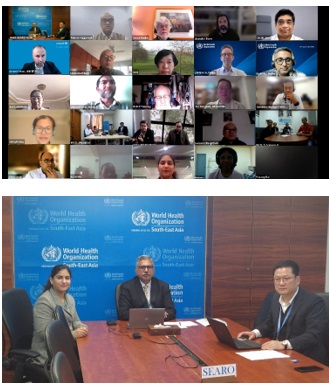 NITAGs play a critical role in strengthening national immunization policies by providing high-quality, evidence-based recommendations. However, across the Region, there is currently no widely adopted, standardized instrument to objectively assess NITAG functionality. Existing assessment approaches offer only partial insight and do not consistently provide a structured basis for evaluation or a clear framework to support gradual, targeted improvements.
To address this gap, WHO SEARO organized the webinar to orient countries on the standardized NMAT and support the systematic assessment and enhancement of NITAG performance.
The webinar aimed to familiarize participants with the structured NMAT framework, demonstrate how to assess NITAG maturity levels, and guide countries in developing actionable improvement plans.
In the opening session, SEAR-ITAG chair emphasized the critical role of NITAGs in guiding evidence based immunization policies across the Region. He encouraged the Member States to actively engage in NITAG assessments to strengthen functionality and reinforce national immunization governance.
Technical presentations by the Task Force for Global Health provided a detailed overview of the tool’s development, structure, and practical application.
Participants were introduced to the tool’s structure, which includes seven core indicators—ranging from NITAG establishment to policymaking integration and stakeholder recognition. Each indicator is rated across five maturity levels (Basic to Leading Edge), enabling countries to pinpoint their strengths, gaps, and priority areas for improvement.
A detailed walkthrough demonstrated how to use the Excel based tool, including its sub indicator layout, maturity criteria, rating system, and automated features. Facilitators highlighted that assessments yield the most accurate results when conducted through consensus among NITAG members and key stakeholders, supported by desk reviews and structured group discussions.
The technical session also introduced the optional NMAT Data Collection Tool, which guides interviews and evidence gathering prior to completing the assessment. Presenters showed how the tool generates summary tables, graphs, and draft action plans, underscoring that NMAT is designed to support internal improvement—not cross country comparison.
The technical session concluded with guidance on documenting results, developing workplans, and preparing final reports. Presenters noted that NMAT outputs—automated maturity tables, strengths and challenges, and criteria met percentages—serve as direct inputs for NITAG deliberations and provide valuable information for ministries of health.
Following the technical sessions, Dr Vinod Bura, Coordinator of the Immunization and Vaccine-Preventable Diseases (IVD) Unit, Department of Health Promotion, Disease Prevention and Control (HDC), WHO SEARO, reiterated the importance of translating the webinar’s guidance into concrete country level action.
He encouraged the Member States to initiate their NMAT self assessments and share the findings to WHO SEARO and the SEAR ITAG Secretariat and begin implementing their improvement plans—key steps toward strengthening evidence informed immunization policymaking across the Region. He noted that a consolidated regional report of all NITAG assessments will guide regional technical support planning and help inform preparations for the upcoming SEAR ITAG meeting.
The webinar marked a significant step in strengthening regional immunization programme governance by equipping countries with a unified, standardized framework to systematically assess NITAG functionality and drive targeted, measurable improvements that support collective progress across the Region.
-----
Authors: BURA, Vinod; KIM Kwang Jin, WHO Regional Office for South-East Asia
IVD unit, Dept. of Health Promotion, Disease Prevention and Control (HDC), WHO SEARO
WHO South-East Asia Region hosts regional webinar on NITAG Maturity Assessment Tool
Photos: © WHO SEARO