
Countries exchange experiences on institutionalizing Catch-up Vaccination in South-East Asia Region
Location: New Delhi, Delhi and Ghaziabad, India
Date: 31 August–3 September 2026
Participants:
Participants included national and subnational immunization programme managers, technical experts and WHO country office staff from Bangladesh, Myanmar, Nepal, Sri Lanka and Timor-Leste. Indian counterparts included representatives of the Ministry of Health and Family Welfare, national and subnational immunization programmes, the National Institute of Health and Family Welfare, and the National Cold Chain and Vaccine Management Resource Centre. WHO staff from the Regional Office for South-East Asia and the Country Office for India, together with partner institutions, supported the technical briefings, institutional visits, field observations, debriefings and country action planning.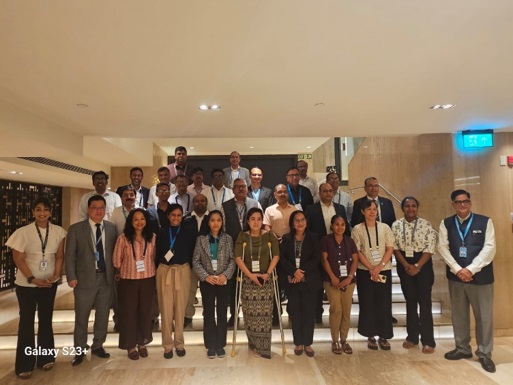
Purpose:
To support practical peer learning on how catch-up vaccination can be institutionalized within routine immunization systems, including beneficiary tracking, microplanning, outreach, vaccine logistics, supportive supervision and follow-up of missed children.
Details:
The four-day country exchange visit brought together immunization programme representatives from five countries to learn from India’s experience in embedding catch-up vaccination within routine immunization systems. The programme combined national and institutional briefings, demonstrations of digital and vaccine-management platforms, field observations in Delhi and Ghaziabad, team debriefings and country action planning.
Participants examined how India identifies, registers, tracks and follows up zero-dose, under-immunized and other missed children. The learning covered multiple digital platforms, including U-WIN (Universal Immunization WIN) for beneficiary registration and due-list tracking, and the Electronic Vaccine Intelligence Network (eVIN) and related tools for vaccine stock management and temperature monitoring. Participants also explored bottom-up microplanning, periodic headcount surveys, risk-based outreach strategies, community engagement approaches, and supportive supervision and programme review mechanisms.
Three multidisciplinary teams explored complementary programme areas. Team A focused on urban immunization operations and U-WIN use. Team B examined outreach for hard-to-reach and mobile populations. Team C reviewed vaccine logistics, cold-chain monitoring and supportive supervision. Daily debriefings enabled participants to compare observations across settings and identify practices that could be adapted in their countries.
The visit highlighted that catch-up vaccination is most sustainable when it is integrated into routine programme policies, plans, budgets and service-delivery platforms. Digital systems can improve visibility and follow-up, but they need reliable beneficiary lists, interoperable data standards, trained health workers, sustainable financing and routine use of data for corrective action.
Country delegations translated the learning into context-specific actions. Common priorities included strengthening policies and standard operating procedures; improving digital beneficiary tracking; institutionalizing microplanning and identification of high-risk areas; reinforcing outreach and community engagement; strengthening workforce and supervisory capacity; and improving cold-chain and logistics monitoring.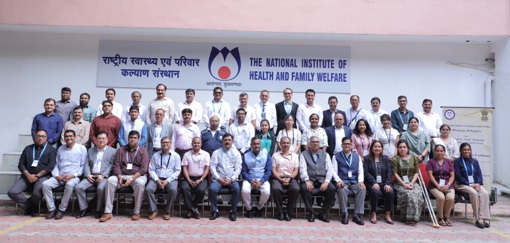
The exchange concluded with country presentations and agreement on follow-up. The next phase will focus on validating priorities with national stakeholders, assigning ownership, integrating actions into existing programme and budget processes, and monitoring implementation through routine review mechanisms. The exchange demonstrated the value of South-South learning in turning operational experience into practical action to reach children who have missed vaccination.
Further information here.
-------
Authors:
BURA, Vinod, and KIM Kwang Jin
Immunization and Vaccine Preventable Diseases Unit, HDC/ WHO SEARO
Organization WHO Regional Office for South-East Asia
Photos- © WHO SEARO