
Mali becomes the 20th country to introduce malaria vaccine
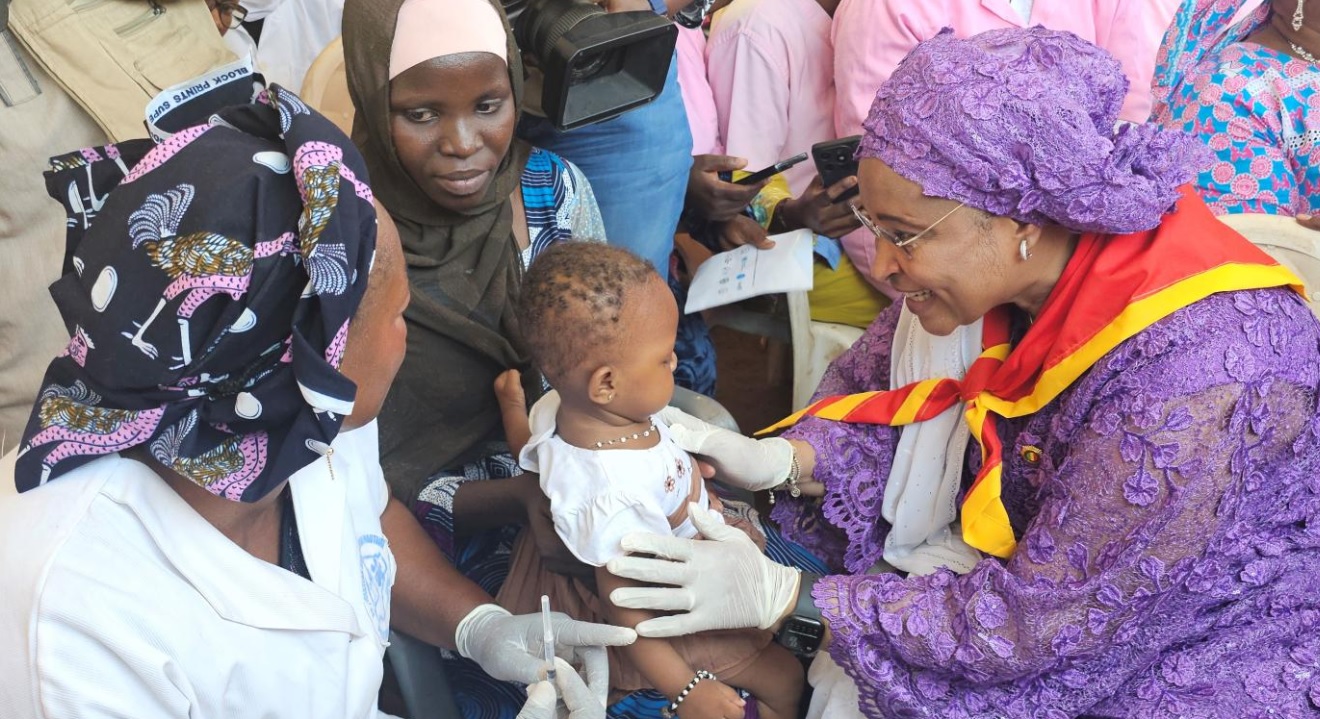 To mark 2025 World Malaria Day, Mali has introduced the R21 vaccine into its health system, targeting 600,000 children aged between 5 and 36 months based in 19 previous districts and 5 regions of the country. Mali is also experimenting with a hybrid mode of vaccine introduction.
The first three doses are administered according to age, the fourth and fifth doses given seasonally before the rainy season which is of high malaria transmission of the disease.
Malaria is endemic in almost the entire Mali. According to the DHIS2 data release in 2024, the country had 3,789,689 confirmed cases of malaria, including 1,129,793 severe cases and 1,638 deaths due to malaria. According to the 2024 WHO World Malaria Report, Mali was one of the eight countries where the number of malaria cases rose significantly between 2019 and 2023, with an increase of 1.4 million cases.
On the launching day, in the commune of Kalaban-Coro, on the outskirts of Bamako, the national authorities, through Mali's Minister of Health and Social Development, Colonel Assa Badiallo Touré, welcomed and thanked all the stakeholders, in particular Gavi, the Global Fund, WHO and UNICEF, for their constant technical and financial support throughout the process of introducing the R21 vaccine into the Expanded Programme on Immunisation (EPI).
For his part, the WHO Representative in Mali, Dr Patrick Kaboré, pointed out that the R21 vaccine was certainly a major advance, but that it was in addition to existing control tools. Otherwise, other preventive measures should continue to be observed, such as sleeping under impregnated mosquito nets, chemoprevention of seasonal malaria, intermittent preventive treatment during pregnancy and indoor insecticide spraying.
----
Authors: Hilaire DADJO (
Photo: Minister of Health of Mali on the introduction day of R21 Vaccine, (WHO/Mali).