
Timor-Leste Conducts Comprehensive Immunization and Vaccine Surveillance Review
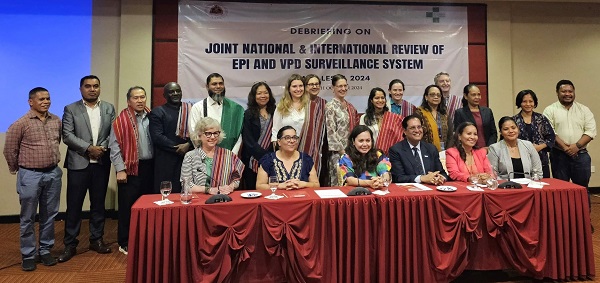 Dili, Timor-Leste – A joint national and international review of the Expanded Programme on Immunization (EPI) and Vaccine-Preventable Disease Surveillance (VPDS), combined with a post-introduction evaluation (PIE), was conducted in Timor-Leste from October 14 to 25, 2024. The assessment aimed to evaluate the country’s immunization progress, identify challenges, and strengthen future strategies.
Timor-Leste has made significant strides in immunization, achieving maternal and neonatal tetanus elimination in 2012, being certified polio-free in 2014, and eliminating endemic measles (2018), rubella, and congenital rubella syndrome (2023). The country has further enhanced its immunization program with the recent introduction of the Pneumococcal Conjugate Vaccine (PCV) and Human Papillomavirus (HPV) vaccine in 2024.
Impact of the COVID-19 Pandemic
Like many countries, Timor-Leste faced disruptions in health services due to the COVID-19 pandemic. While fixed immunization sites remained operational during 2020-2021, outreach services—critical for the 20-25% of the population living in remote areas—were halted but resumed in 2023.
Nationwide Assessment of Immunization Services
The review covered 13 out of 14 municipalities and evaluated over 70 health facilities across different levels. Key focus areas included:
- Program management and financing
- Vaccine supply, cold chain logistics, and service delivery
- Coverage monitoring and adverse event surveillance
- Human resource capacity and demand generation
Findings were presented during a debriefing attended by Minister of Health Dr. Élia António de Araújo dos Reis Amaral.
Key Findings and Recommendations
The assessment confirmed strong government commitment to immunization and highlighted opportunities for further strengthening routine vaccination. The review’s key recommendations included:
- Budget Analysis: Evaluating financial allocations, expenditures, and the effectiveness of government and partner funding.
- Workforce Development: Investing in staff training, supportive supervision, and microplanning at health facilities.
- Improved Tracking Systems: Incorporating dropout tracking and follow-up mechanisms into routine immunization.
- Data Quality Enhancement: Strengthening denominator accuracy through assessment and triangulation of data.
- Vaccine Safety Measures: Enhancing awareness, notification, and investigation of Adverse Events Following Immunization (AEFI) to minimize risks and maintain public trust.
The review’s findings will play a vital role in shaping Timor-Leste’s National Immunization Strategy 2025-2030, ensuring continued progress in disease prevention and public health.
-----
Authors: Dr Sigrun Roesel, Technical Officer Vaccine Preventable Diseases, Immunization and Vaccine Development (IVD), Communicable Diseases (CDS) SEARO
Dr Nazmun Nahar, Technical Officer (Expanded Programme on Immunization), WHO Timor Leste
Mr Mateus Cunha, National Professional Officer, WHO Timor Leste
World Health Organization South-East Asia Regional Office (WHO SEARO)