

Fostering evidence-based and data-driven approaches for increasing demand
The Vaccination Demand Hub was created in 2018 by a group of partners, including multilaterals, global partnerships, donors and non-governmental and civil society organizations. The Demand Hub is co-chaired by UNICEF and Gavi, the Vaccine Alliance and led by a leadership team.
CO-CHAIRS
PARTNERS

We work to foster evidence-based and data-driven approaches for increasing demand for immunization among regions and countries. We leverage behavioural and social sciences to strengthen immunization programmes and build quality health services to increase vaccine demand to protect all.
Since its inception, the Demand Hub has made the following gains:
- The Demand Hub has been a successful global coordination and knowledge-sharing platform, which has provided thought leadership and technical guidance to regions and countries to build public trust and confidence in vaccination.
- The Hub contributed to the development of IA 2030, particularly the objectives for strategic priority 2.
- In mid-2020, a sub-group of the Demand Hub was formed to focus on the demand for COVID-19 vaccination. As a result, multiple tools and guidance were rapidly developed and disseminated to assist programmes and partners. The same group has since supported various technical activities, including providing inputs in developing guidance for National Vaccine Deployment Plans and coordinating and contributing specialist technical assistance to Regions and Countries to achieve high uptake of COVID-19 vaccines.
The Vaccination Demand Hub develops and curates a knowledge base of resources from organizations and experts across many disciplines.

The Big Catch-up is a global initiative to close immunization gaps caused by the backsliding of immunization coverage during the COVID-19 pandemic, restore global immunization levels, and strengthen immunization systems so that catch-up activities become an integral part of immunization programmes. This page brings together Big Catch-up documents including guidance, frequently asked questions (FAQs), and monitoring, evaluation, and learning (MEL) forms and tools, as well as a forum for sharing country experiences, updates, and materials.


The massive experience worldwide vaccinating adults against COVID-19 provides a valuable opportunity to strengthen and expand adult immunization for existing vaccines (influenza, Respiratory Syncytial Virus (RSV), tetanus/pertussis containing vaccines, pneumococcal vaccines, zoster, Mpox…) and for those in the pipeline (i.e. new generation of tuberculosis vaccines). Many countries are providing vaccines for adults through their routine services and exploring new entry points as part of primary health care (PHC).
This Community of Practice (CoP) on Adult Immunization aims to create a dynamic and inclusive platform (membership is not restricted) for sharing knowledge, best practices, and peer-learning on adult immunization and with your contributions move towards a world where everyone, everywhere, at EVERY AGE fully benefits from vaccines for good health and well-being, in alignment with IA2030 vision. This CoP is managed by WHO with contributions of many partners.

The Global Yellow Fever Laboratory Network (GYFLaN) Group is private, where members are staff within the GYFLaN in the African and Eastern Mediterranean regions, and Region of the Americas, and members of the EYE-Strategy Yellow Fever Laboratory Technical Working Group (EYE-LTWG).
The purpose of this group is to house and share documents of use to the GYFLaN, facilitate discussion and collaboration, and provide a single hub for information specific to the GYFLaN.

The EYE-LTWG Group is a place for the Laboratory Technical Working Group of the EYE Strategy to discuss topics specific to the Group. This includes access to scheduled meeting-related material, LTWG-produced and group-relevant publications, LTWG annual conference announcements and information, recordings and photographs of group-related activities, and Group member contact information. This group is private.


The immunisation Supply Chain Community of Practice
Our Purpose
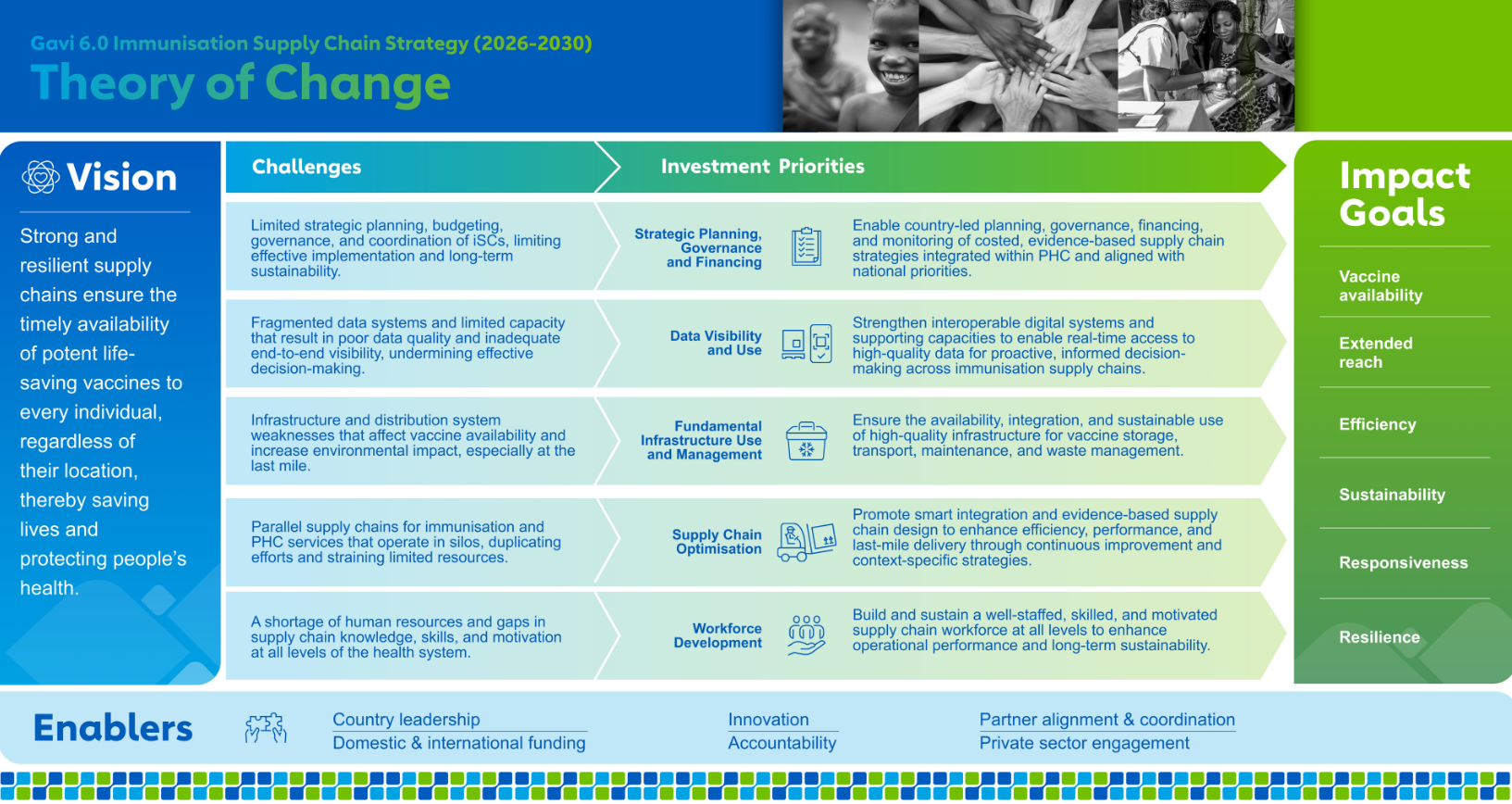
The immunisation Supply Chain Community of Practice (iSC CoP) is a collaborative space designed to strengthen communication and foster learning exchanges and collaborations among key stakeholders at country, regional, and global levels. By connecting diverse actors, we aim to accelerate progress toward the Gavi 6.0 iSC strategy and its investment priorities.
What We Ask of Our Members
The strength of this community depends on active participation. As a member, you are encouraged to:

Share your experiences and lessons learned from the field to keep the CoP updated with the latest developments, guidance, innovations, and best practices.

Engage in discussions on emerging topics, peer learning sessions, and technical exchanges to avoid duplication of efforts and identify learning needs.

Listen to peer experiences, feedback, and field realities, using practitioner voices to inform practical solutions and continuous improvement in supply chain performance.
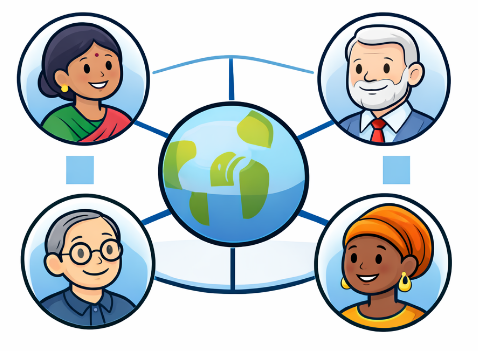
Connect with community members across countries and organisations, fostering a sense of belonging and using the CoP as a trusted space for collaboration and collective learning.
Ce groupe est destiné aux membres intéressés par les formations de l'OMS Scholar. Que vous ayez participé ou que vous soyez intéressé à participer à l'une des formations, ce groupe vous permet d'obtenir des mises à jour, de partager des informations, d'entrer en contact avec d'autres anciens élèves, d'élargir votre réseau, etc.
This group is for members interested in WHO Scholar courses. Whether you participated or are interested in participating in one of the trainings, this group is your place to get updates, share information, connect with fellow alumni, etc.

The East African Community (EAC) is a regional intergovernmental organisation currently comprising eight (8) Partner States: the Republics of Burundi, Kenya, Rwanda, South Sudan, Uganda, the United Republic of Tanzania, the Democratic Republic of Congo, and the Federal Republic of Somalia, with its headquarters in Arusha, Tanzania. Since the admission of the Democratic Republic of the Congo in 2022 and Somalia in 2024, the bloc has significantly expanded its demographic and economic footprint. The EAC is now home to an estimated 331–350 million people, covers approximately 5.4 million square kilometers, and has a combined GDP estimated at over US$ 312 billion. (EAC 2023 Statistics).
The work of the EAC is guided by its Treaty, which mandates Partner States to collaborate and deepen integration on political, economic, social and cultural dimensions with a view to improve the quality of life of the citizen. It is under this framework particularly Article 118 of the Treat authorizes the Partner States to cooperate with eventual integration on Health. This how the EAC formed the Regional Centre of Excellence for Vaccines, Immunisation and Health supply Chain Management (EAC RCE-VIHSCM). The RCE works closely with EAC Expanded Program for Immunisation (EPI), National Medical Stores, the National Drug Authorities and, the public universities and other Supply Chain Management (SCM) leaders to find innovative solutions to solve existing and emerging challenges to immunisation and health supply systems in the region.
Since its establishment and official launch in 2016, the EAC RCE-VIHSCM, hosted by the University of Rwanda in Kigali, has played a key role in addressing critical gaps in health supply chain systems, vaccines, immunization, and pharmaceutical workforce development in the EAC region.
To date, the Centre has contributed significantly to regional health systems strengthening through specialized academic programmes, professional short courses, applied research, technical assistance, and policy engagement. In alignment with the EAC regional integration agenda, the mandate of the EAC RCE-VIHSCM has further expanded to support regional pharmaceutical and vaccine manufacturing initiatives, including the operationalization of pooled procurement mechanisms.
The creation of this community of practice (CoP) with support from WHO TechNet-21 is thus a vehicle to institutionalise closer collaboration especially in the face of COVID-19 onslaught. This will help the EAC counter the impact of the pandemic on routine immunisation and to prepare itself for the advent of corona virus vaccine. Besides the EAC-Immunisation Managers, the CoP will aim to pool together other practitioners of health supply chain as well as expertise from UN agencies like Gavi, UNICEF, WHO and UNFPA and reputable CSOs.

A community of practice and resource portal for professionals supporting national immunisation
Our Story
Our Purpose
What We Do
Country-driven knowledge: We provide an enabling environment for members to participate and share knowledge that highlights country-led initiatives and lessons learnt.
Content & Innovation: We regularly curate and publish relevant resources on vaccine procurement and innovation, focusing on practical experiences and lessons learnt.
Virtual meetings: Members directly exchange knowledge with each other, as well as with UNICEF and partners through annual in-person VPF and online activities.
Our Membership Criteria
- Membership is open to individuals whose roles are related to vaccine procurement, such as national buyers, national warehouse stock managers, …
- The focus is put on government stakeholders in Ministries of Health or Finance
- Membership extends to intergovernmental and non-governmental organisations (IGOs and NGOs) that support vaccine procurement

This is a group for people having to engage on vaccination coverage surveys wishing to promote improved quality.
Useful material can be found at https://www.technet-21.org/en/topics/vaccination-coverage-surveys and https://www.who.int/immunization/monitoring_surveillance/routine/coverage/en/index2.html

Ce groupe s'adresse aux personnes impliquées dans les enquêtes de couverture vaccinale et souhaitant en améliorer la qualité.
Vous trouverez tout le matériel nécessaire sur https://www.technet-21.org/en/topics/vaccination-coverage-surveys et https://www.who.int/immunization/monitoring_surveillance/routine/coverage/en/index2.html

